

Technology may enable the transaction, but people make the solution work.
I am writing this from a hotel in upstate New York, preparing to return home to Italy, with the conversations from MWAA in Chicago, RSPA RetailNOW in Las Vegas, and a partner visit in Los Angeles still fresh in my mind.
This July, our theme at Dejavoo was Lead the Conversation. After moving through these different cities and industry environments, I found myself thinking less about who spoke the loudest – and more about what it actually means to lead.
Leading a conversation is not simply arriving with an answer. It means listening with intention, asking questions that may be less comfortable, and noticing the thread between conversations that initially seem unrelated.
At MWAA, I heard discussions about modernization, VAMP, risk, and preparing a payments business for an eventual exit. At RSPA, I felt the energy of the ISV community, a growing ecosystem of integrated solutions, and both established and newer players finding their place in the channel. In between the sessions and booth conversations, I spent time with agents, partners, customers, colleagues, and other exhibitors.
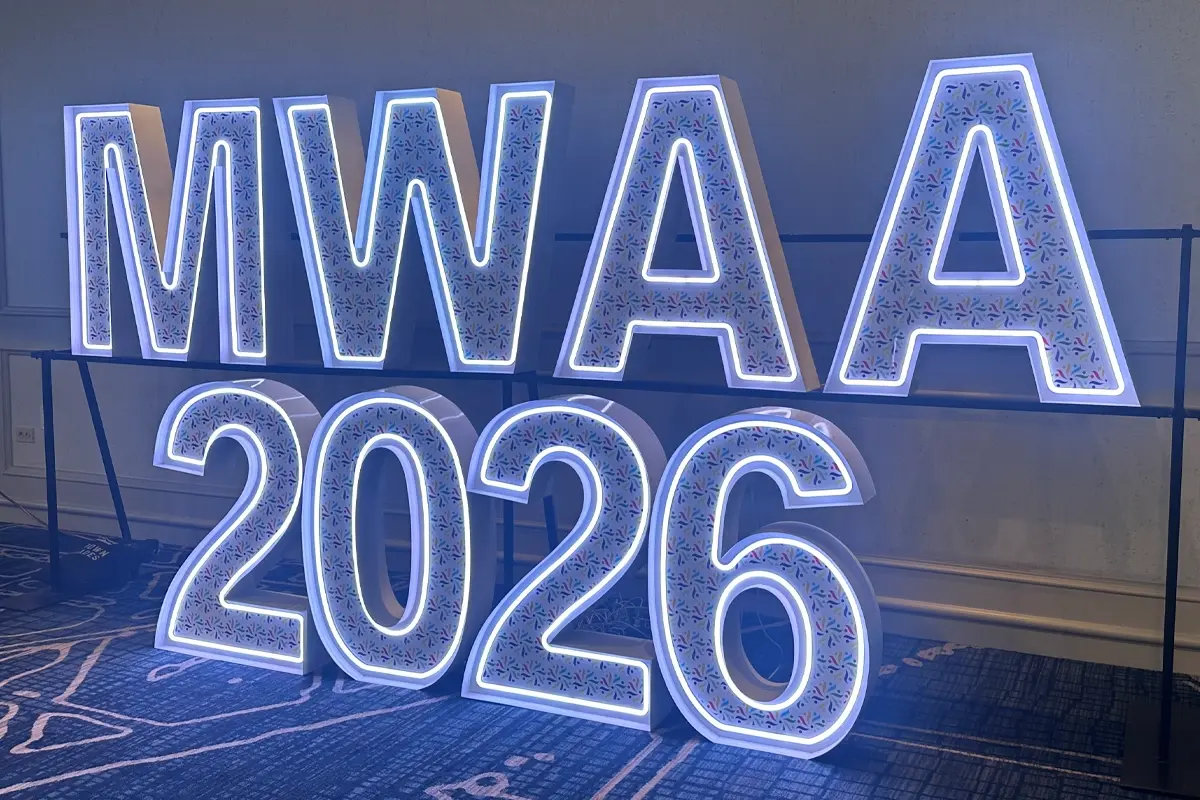
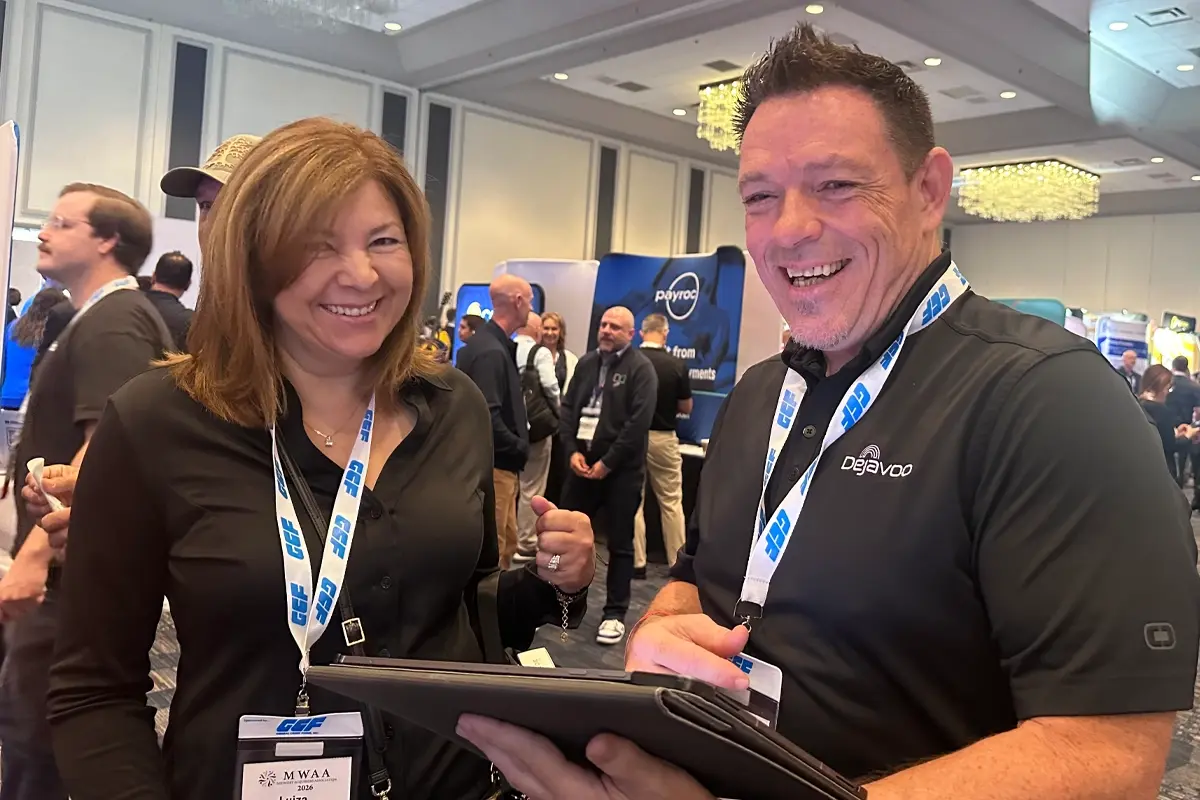
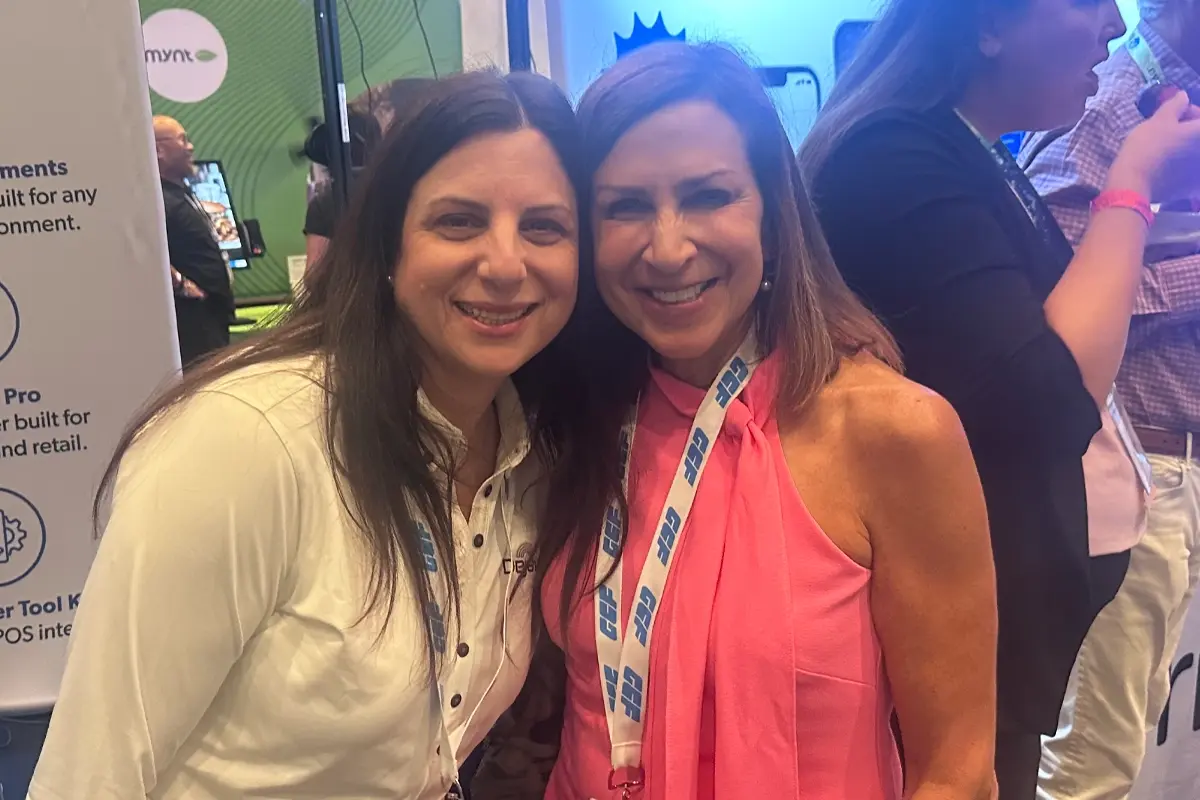
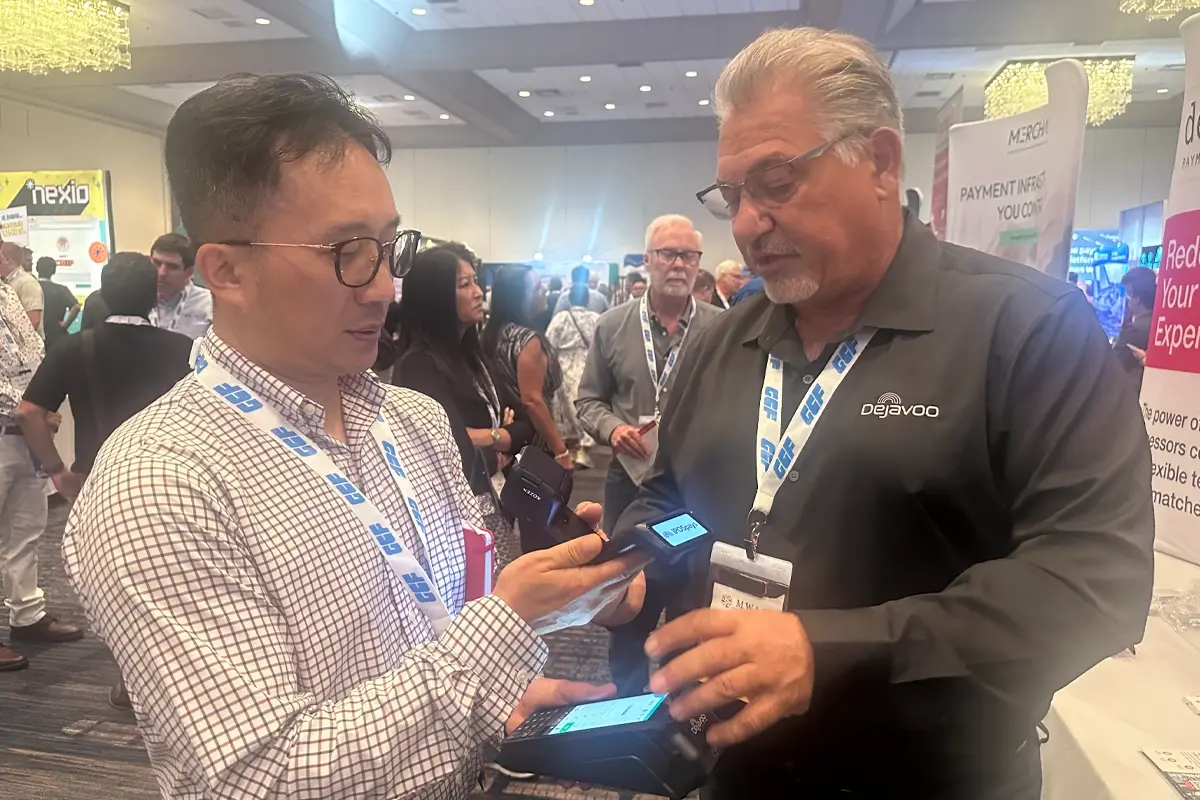
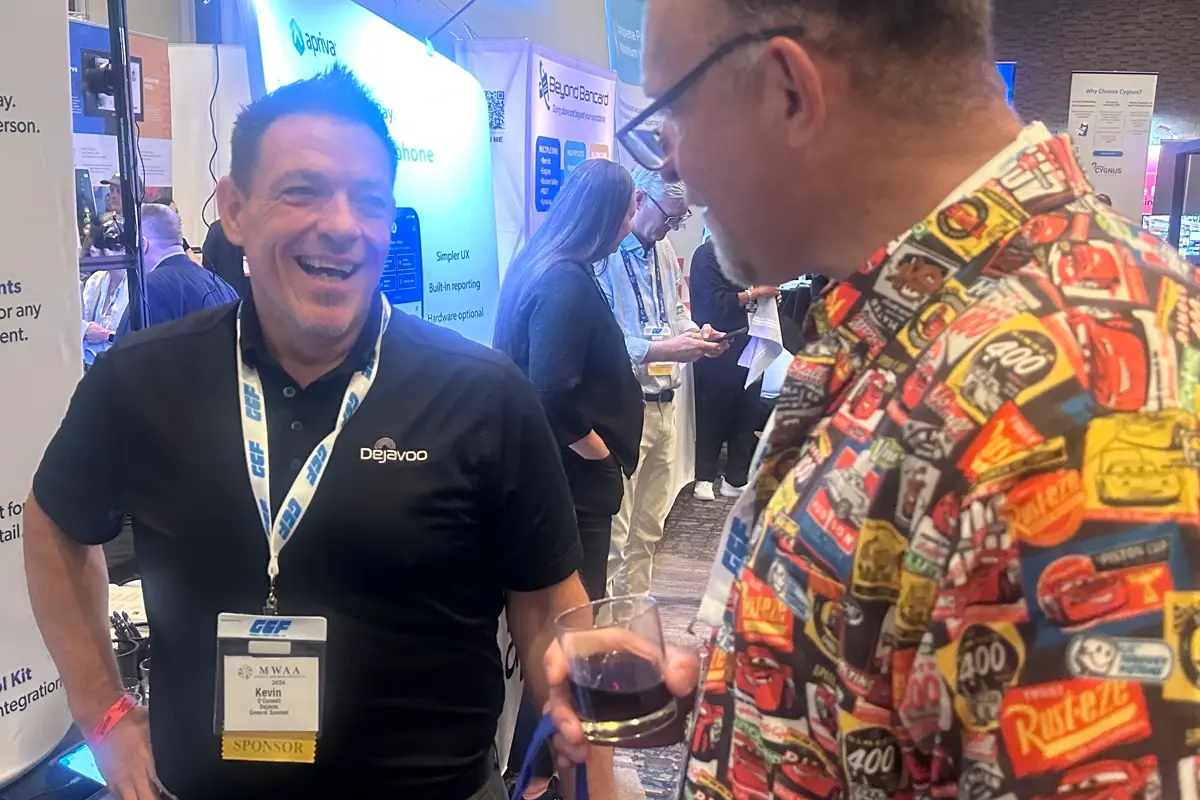
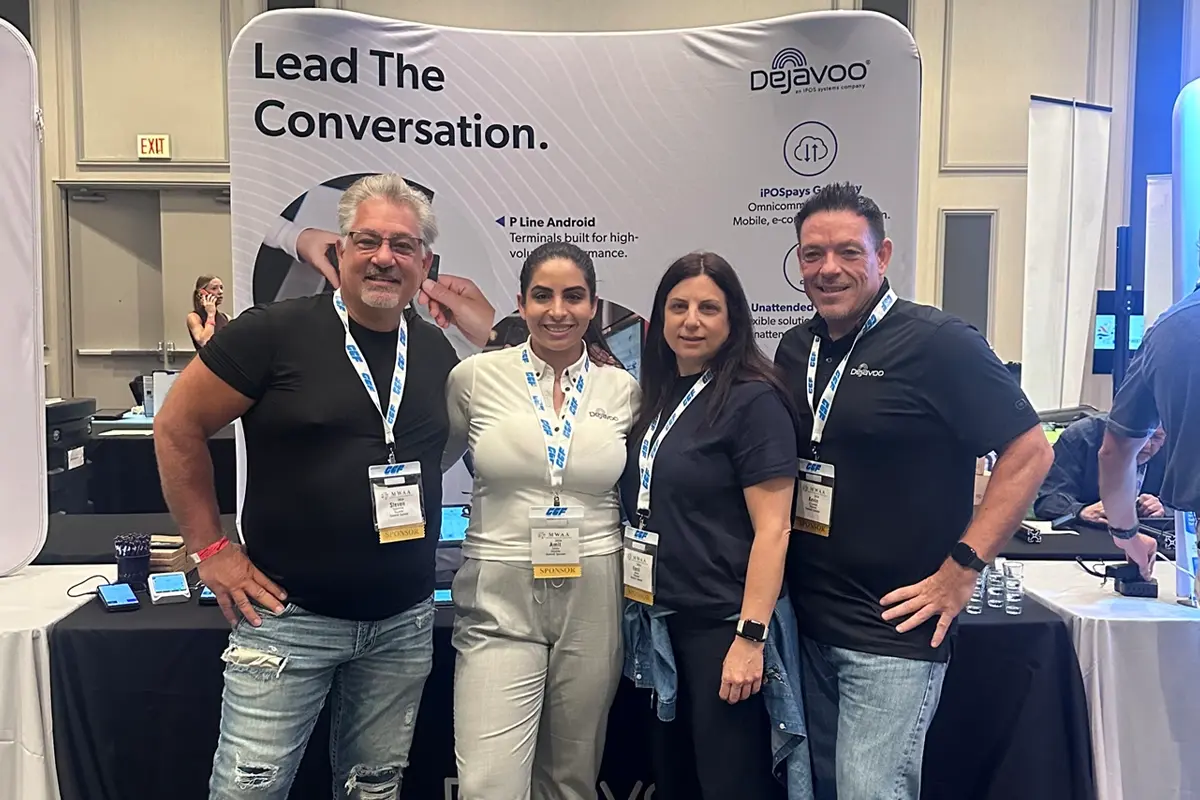
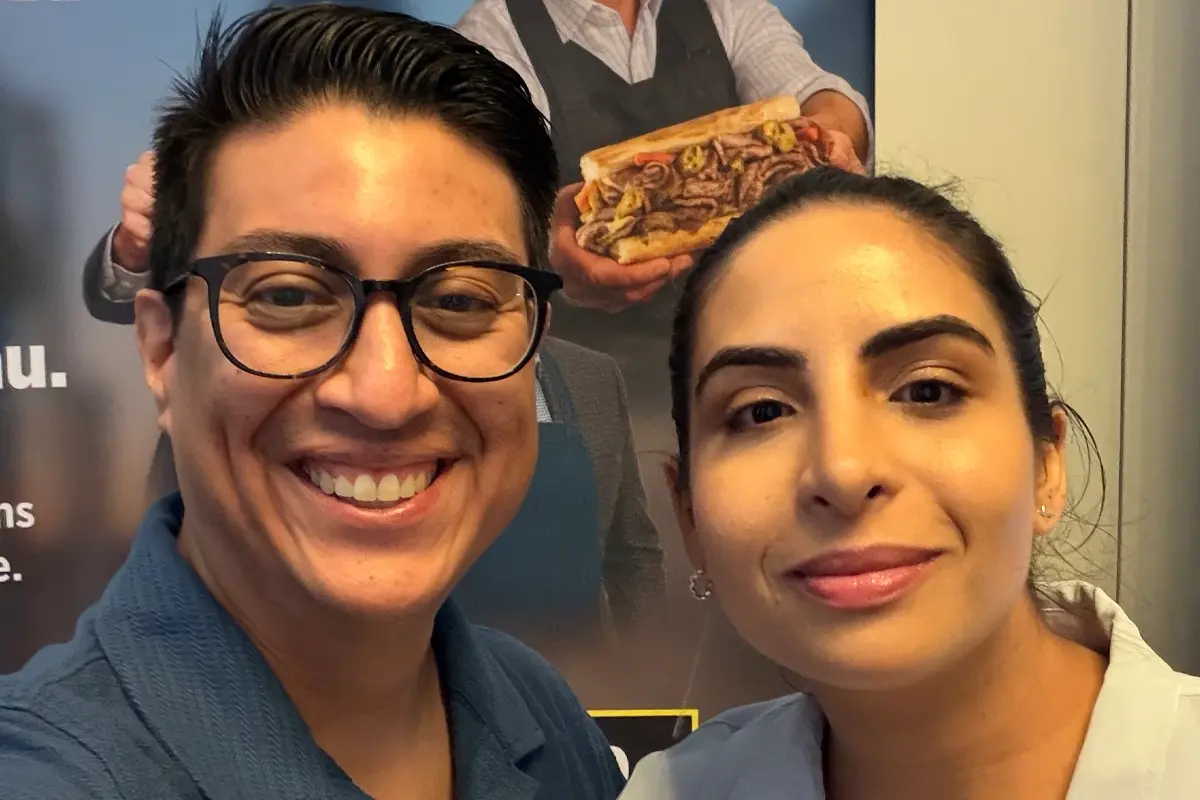
On the show floor, friendships are rekindled and new partnerships formed. Dejavoo’s Ilanit Goren at MWAA.
The more I listened, the clearer the thread became: technology may enable the transaction, but people make the solution work.
Two Shows, Two Different Kinds of Energy
MWAA and RSPA offered two distinct perspectives on the payments ecosystem.
MWAA felt like an event built around existing relationships. The opening evening brought strong traffic and an opportunity to reconnect with agents and partners, hear what they are experiencing, and reinforce the trust that has developed around Dejavoo. It was less about collecting a stack of new leads and more about nourishing
the relationships and industry knowledge that allow future growth to
happen.
The pace shifted during the main show day, and that created a different kind of opportunity: time to reconnect with other exhibitors, visit booths more intentionally, and have conversations that are difficult to fit into the busiest hours. Regional shows continue to matter precisely because they create space for both planned meetings
and the unexpected exchanges that happen when the industry is together.
RSPA brought a different energy. In a room filled with ISVs, vendors, distributors, and integration partners, I could feel the excitement around what companies are building. It was also interesting to see traditionally direct-to-merchant players entering a more partner-driven environment. It raised a question for me: is the industry rediscovering that increasingly complex merchant environments require not only good technology, but also specialization, collaboration, and human guidance?
I was not able to attend every RSPA session, so my perspective is necessarily grounded in the show floor, the exhibitors, and the conversations I experienced. What stood out was how intentionally the organization kept the community engaged: recognizing companies and individuals, celebrating contribution, creating different points of participation, and maintaining an organized and active floor.
Dejavoo was honored to receive the 2026 RSPA Vendor Award of Excellence—Bronze in Hardware and Software. Because these awards are voted on by resellers, the recognition carried particular meaning. I was also personally grateful to be recognized among the RSPA NextGen 50 Under 40 Rising Stars.
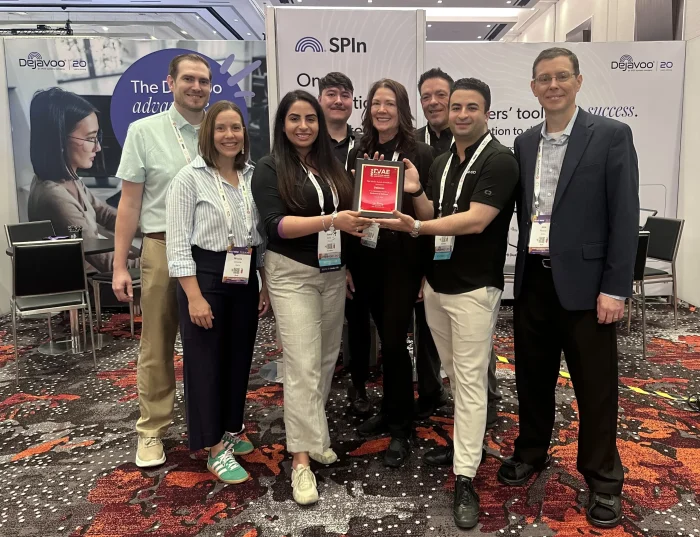
The Dejavoo team receives the RSPA Vendor Award of Excellence from Chris Arnold, Director of Member Services and Marketing at RSPA, Nicole Green, Sr. Member Services Manager, RSPA (L) and Jim Roddy, CEO, RSPA (R)
The Dejavoo team receives the RSPA Vendor Award of Excellence from Chris Arnold,
Director of Member Services and Marketing at RSPA, Nicole Green, Sr. Member
Services Manager, RSPA (L) and Jim Roddy, CEO, RSPA (R)
As I moved through the events, I also asked people what they thought of the sessions. The first answer was often a quick, positive ‘It was great.’ One more question usually revealed the more interesting takeaway—the detail, question, or ‘yes, but’ that gave the conversation depth. It reminded me that the value of a session is not only what is
said onstage; it is also the questions it gives us permission to keep asking afterward.
Thank you to MWAA and RSPA, their teams, speakers, exhibitors, and communities for creating the places where these conversations can begin—and continue after the show.
The Merchant Cannot Be Missing from the Conversation
Across both shows, I kept returning to one observation: we talk constantly about the merchant, but we do not often see or hear directly from the merchant in the room.
That absence matters. We discuss platforms, integrations, underwriting, fraud, disputes, compliance, onboarding, residuals, and growth—all in service of businesses whose day-to-day realities may not be represented in the conversation.
A merchant is not simply subscribing to another piece of software. Payments are not Spotify or Netflix. A payments decision touches revenue, operations, customer experience, risk, security, compliance, integrations, and the ability to grow. Having access to more information does not automatically give a business more clarity.
That is why agents, ISOs, ISVs, and merchant service providers remain so important. Their value is not limited to selling or installing technology. They interpret complexity, understand the merchant’s environment, identify the right next step, and remain present when a problem cannot be solved by clicking a button.
From More Features to the Right Next Step
The feedback I heard from agents was practical. They want more education and sales support from their ISOs. They want strategies that help them communicate value. They want solutions that make onboarding simpler. And they want to know that when they identify friction, someone is listening.
Some feedback was highly specific, including concerns about the amount of visible wiring associated with certain QD device configurations. Dejavoo is not the manufacturer, but that does not make the observation irrelevant. Our responsibility is to hear the concern, understand the environment in which the device is being
presented, explain the available options, carry feedback to the right people, and continue working toward a better experience.
The larger lesson is about how we communicate technology. Our industry often tries to sell every feature at once. But when a partner or merchant has an immediate problem, they do not need a complete inventory of everything a platform can do. They need to understand what will move them to the next step.
Good marketing does not make technology sound more complicated. It makes the connection between a problem and a solution clearer.
What Should ‘Legacy’ Really Mean?
The MWAA session ‘Legacy + FinTech: The Modernization of Payments’ brought together moderator Ania Lackey of FinTech Atlanta and panelists Jason Noto of Polsinelli, Laura Gibson-Lamothe of Georgia Fintech Academy, and Kevin Lambrix of Hoyne Bank. Their discussion connected modernization with readiness, regulation, partnership, and institutional knowledge—and gave me a starting point for questioning the language.
In technology, legacy is often used to mean outdated, slow, or ready to be replaced. As human beings, however, we understand legacy very differently. A positive legacy is something enduring—something worth carrying forward.
That distinction matters because not everything that came before us is a problem to be eliminated. Some infrastructure needs to evolve. Some processes create unnecessary friction. But institutional knowledge, underwriting discipline, reliability, relationships, and trust are not technical debt. They are assets.
The better question is not simply, ‘How do we replace what is old?’ It is, ‘What no longer serves the customer, and what has stood the test of time because it still creates value?’
Technology is a man-made solution to a man-made problem. Its value depends first on how well we understand the problem. Innovation without that understanding may give us something new, but it does not guarantee that we have moved forward.
Treat the Source, Not Only the Symptom
That same principle appeared in ‘VAMP Is Here, SCAM Protect Is Coming,’ moderated by Ken Musante of Napa Payments and Consulting and featuring Monica Eaton of Chargebacks911, Anush Amiryants of Visa, Richard Parrott of Talus, and Jonathan O’Connor of Fiserv. Their discussion translated a dense and consequential subject
into a practical question: how do we identify and address risk before the symptom becomes the crisis?
The conversation was not only about ratios, thresholds, or penalties. It was about recognizing risk earlier, understanding the underlying cause, and intervening before the problem becomes more costly for the merchant and the wider ecosystem.
The most memorable takeaway for me was simple: treat the source, not only the symptom.
That principle extends beyond risk. Do not wait for disputes to accumulate before improving transparency. Do not begin preparing a business for an exit only when the owner is ready to leave. Do not wait for customer dissatisfaction to become attrition. And do not arrive at a show hoping the message will reveal itself once the booth opens.
Preparation creates clarity. Clarity makes action possible.
The same message appeared in ‘How to Build for the Exit.’ Moderator Jennifer L. Johnson and panelists Anthony Malatesta of Wellesley Hills Financial, Joe Cherry of Excetras, and Ashley Basnett of Reeve Basnett Pirog reminded the room that a strong exit is built long before a transaction. Reputation, attrition, agreements, partner
communication, and operational readiness all affect value. Technology may support a portfolio, but relationships help make it transferable.
Beyond the Curated Booth
One of the most meaningful parts of my time in Los Angeles happened after the shows, when I visited Kenny and the team at CLIQ.
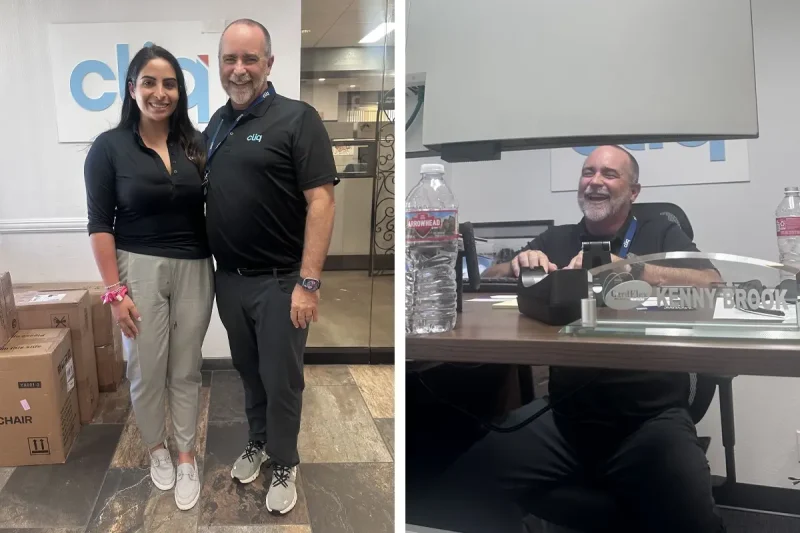
Amit Iris Zenou visits Kenny Brook, Cliq’s Senior VP of Sales & Marketing at his office in Los Angeles.
We had met many times in conference environments, but visiting the office offered a different perspective. At a show, every company presents a curated version of itself. The booth is polished, the message is prepared, and everyone is operating in show mode. In the office, I could see more of the day-to-day reality: the team, the environment, and what it actually means to operate as an ISO today.
I could see calls coming in and watch real situations unfold. The questions were no longer hypothetical because the operating context was right in front of us. Both settings have value. The show brings people and ideas together; the office reveals how those ideas meet the working day.
The visit reminded me how much we learn when we step into a partner’s world rather than only asking them to step into ours. It also made me wonder how our industry events might create more room for partners to show who they really are—not only what they sell.
The Changing Identity of the ISO
The identity of the ISO is changing. That may be one of the most difficult transitions facing our industry because it requires more than adopting new technology; it requires a mindset shift.
Providing access to payment processing is no longer enough. Merchants can find products, pricing, and information on their own. The ISO’s growing value lies in becoming an educator, advisor, solution architect, relationship manager, and connector between the merchant and an increasingly complex ecosystem.
ISVs bring specialized solutions. ISOs bring merchant relationships, contextual understanding, and experience navigating the realities behind the transaction. Neither side needs to become the other. The greater opportunity is to connect them more intentionally so that merchants receive technology that is both useful and supported.
Experience remains one of this industry’s greatest assets. But experience creates its greatest value when it stays open to new questions—not only familiar answers.
The Real Threat Is Not Each Other
Competition is healthy, and every company must continue earning its place. But after these two shows, I do not believe the greatest threat is one another.
The greater threat is the assumption that technology can sell itself, explain itself, implement itself, and support a merchant by itself.
When technology is introduced without education, context, or human guidance, businesses can end up with more tools and less clarity. Instead of feeling empowered, they may feel more alone.
This is where Dejavoo’s high-tech, high-touch philosophy continues to stand the test of time. Our processor-agnostic approach and commitment not to target our partners’ merchants allow us to enable the people who own and nurture those relationships. Our role is not to remove them from the equation. It is to make them—and the solutions they bring to market—stronger.
Preparing for the Next Wave
July invited us to Lead the Conversation. Our August theme is Prepare for the Next Wave. The transition feels appropriate because the true measure of a show is not only what happens on the floor. It is what we carry back, what we question, and what we choose to do next.
For Dejavoo, that means creating greater clarity around our sales and partner structure as we grow. It means developing a more unified understanding of the different facets of each partner so that sales, marketing, product, support, and leadership are not seeing isolated pieces of the same relationship. It means grouping and supporting partners intentionally—without losing the high-touch side of the high-tech, high-touch equation.
It also means continuing to strengthen the connection between ISOs and ISVs, translating product capabilities into the problems they solve, and making education and enablement part of the solution—not an afterthought.
Now, as I prepare to leave New York and return home to Italy, I am still processing everything I heard and observed across Chicago, Las Vegas, and Los Angeles. I believe that is part of the value. Field insight should not be rushed into a campaign before it has been understood. First, we listen. Then we connect the patterns. Then we bring the right questions back to the people who can help turn them into action.
At MWAA, keynote speaker Damon West challenged us to ‘be a coffee bean’—to respond to pressure by transforming the environment around us. That message stayed with me. Payments will continue to change. New technologies, regulations, competitors, and business models will keep raising the temperature.
Our responsibility is not simply to withstand that change. It is to help shape what comes next—together, with greater clarity, stronger partnerships, and the merchant still at the center of the conversation.